Carlos Correa Parents: How Carlos Sr. and Sandybel Oppenheimer Shaped His Baseball Journey
Carlos Correa has built a successful baseball career through talent, discipline and years of hard work, but his journey started far away from the bright lights of Major League Baseball. Before becoming a professional player, Correa was a young boy growing up in Barrio Velázquez, a small fishing community in Santa Isabel, Puerto Rico, where his parents made major sacrifices to support his ambitions.
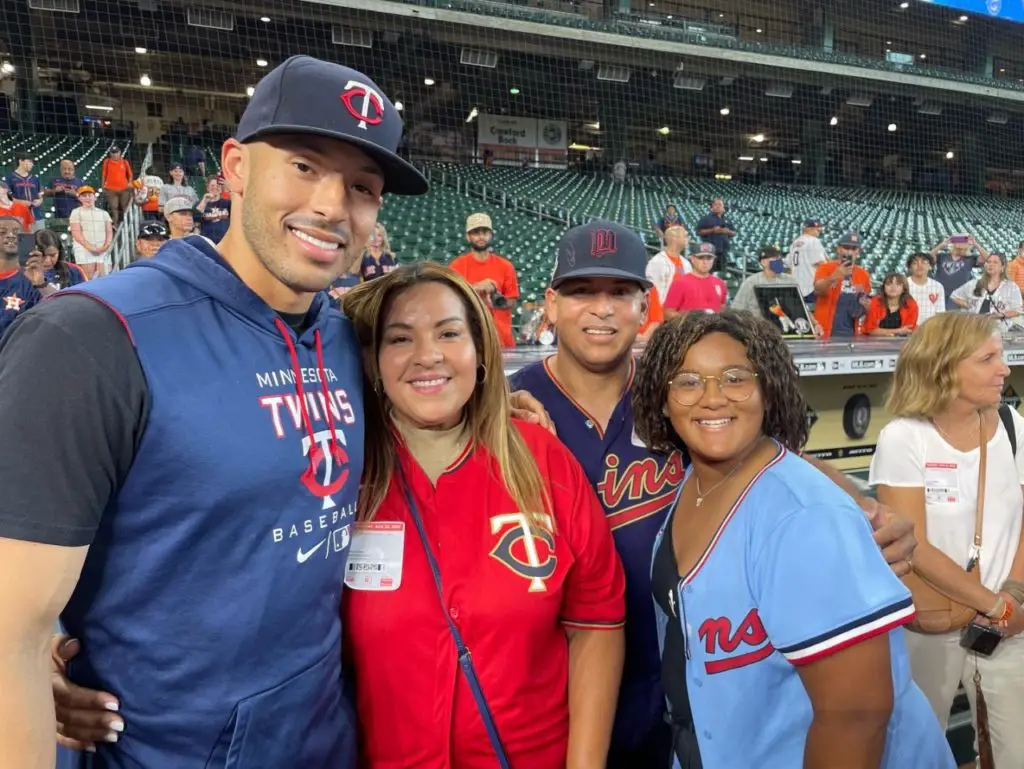
Carlos Correa’s parents are Carlos Correa Sr. and Sandybel Oppenheimer. Their roles in their son’s childhood were different but equally important. His father concentrated heavily on developing his baseball ability, while his mother kept a close eye on his education and everyday needs. Together, they created the structure that allowed their son to chase an unusually ambitious dream.
Who Are Carlos Correa’s Parents?
Carlos Correa was born to Carlos Correa Sr. and Sandybel Oppenheimer, both of whom are Puerto Rican.
The family lived in modest circumstances in Barrio Velázquez in Santa Isabel, Puerto Rico. Correa’s childhood was not built around expensive training facilities or the advantages that sometimes surround future professional athletes.
Instead, his development required considerable effort from the entire family.
Carlos Sr. worked demanding construction jobs, while Sandybel handled many of the responsibilities at home. Their goal was not simply to develop a talented baseball player. They also wanted their son to remain disciplined in school and understand the value of hard work.
Those lessons became central to Correa’s early years.
Carlos Correa Sr. Started Working at a Young Age
Carlos Correa Sr.’s own story began with responsibility arriving unusually early.
He reportedly started working in construction when he was just 13 years old. A few years later, he married Sandybel while both were still teenagers. Carlos Sr. was 16 and Sandybel was 14.
As their family grew, providing financially became a major responsibility.
Carlos Sr. sometimes worked extremely long hours and reportedly took as many as three jobs in a single day to help cover expenses, including costs associated with his son’s education and baseball development.
His workday could begin around 4 a.m., but finishing construction work did not necessarily mean his responsibilities were over.
There was often baseball practice waiting afterward.
His Father Introduced Him to Baseball
Carlos Sr. played a particularly important role in introducing his son to baseball.
When Carlos Jr. was around five years old, his father began teaching him the sport. Carlos Sr. was not simply relying on instinct. He studied baseball so he could better understand the game and pass those lessons to his son.
Training became part of their daily routine.
After long hours working construction, Carlos Sr. would head to the baseball field and work with his son. The routine demanded considerable energy, especially after starting work before sunrise.
For young Carlos, however, those sessions provided an important foundation.
His father taught him much more than basic baseball technique. Watching Carlos Sr. work long days and still arrive at the field demonstrated what commitment looked like in everyday life.
Sandybel Oppenheimer Focused on Education
While Carlos Sr. handled much of the baseball training, Sandybel Oppenheimer played an equally important role behind the scenes.
Education was one of her priorities.
Correa has credited his mother with making sure he remained serious about school while his baseball responsibilities increased. Athletic talent did not provide an excuse for poor grades.
Sandybel reportedly monitored his academic performance closely and made sure his daily routine remained organized.
She also handled many practical things that can easily be overlooked when discussing the development of an elite athlete. Meals needed to be prepared, schoolwork had to be completed, and everyday family responsibilities continued regardless of how promising her son’s baseball career appeared.
The arrangement created balance.
His father could concentrate on helping him develop as an athlete, while his mother ensured that baseball did not completely take over his childhood.
Carlos Correa Grew Up in Santa Isabel
Correa’s upbringing in Santa Isabel became an important part of his story.
Barrio Velázquez was a relatively small fishing community, far removed from the enormous MLB stadiums where Correa would eventually play.
The family’s financial circumstances meant opportunities could not simply be purchased.
Instead, Correa’s progress depended on talent, family support and consistency.
His parents recognized his potential early, but developing that ability required sacrifices. Equipment, travel, education and training all carried costs.
Carlos Sr.’s willingness to work multiple jobs reflected how seriously the family took those responsibilities.
At the same time, Sandybel’s focus on education meant their son’s future was not treated as entirely dependent on baseball.
Carlos Correa Has Two Younger Siblings
Carlos is not the only child of Carlos Sr. and Sandybel.
He has two younger siblings, Jean Carlos and Leibysand.
Baseball also became part of the next generation of the Correa family. Jean Carlos followed his older brother into the sport, giving the family another connection to competitive baseball.
Growing up with siblings also meant Carlos was part of a close family unit rather than having his childhood revolve exclusively around his individual athletic ambitions.
The family’s journey eventually stretched well beyond Puerto Rico as Carlos established himself professionally in the United States.
His parents later settled near him in Houston, allowing the family to remain close despite the dramatic changes brought by his MLB career.
From Puerto Rico to the MLB Draft
The sacrifices made during Correa’s childhood eventually produced an extraordinary result.
In the 2012 MLB Draft, the Houston Astros selected Carlos Correa with the first overall pick.
It was a remarkable moment for a family that had spent years arranging life around construction shifts, schoolwork and baseball practices.
Being selected first overall brought enormous expectations.
Correa eventually made his MLB debut with Houston in 2015 and quickly demonstrated why the organization had invested its top selection in him. He was named American League Rookie of the Year that season.
More accomplishments followed as his professional career developed.
He earned All-Star recognition, became a World Series champion with Houston and later received major defensive honors, including Gold Glove and Platinum Glove recognition.
His Parents’ Influence Continued Beyond Childhood
Carlos Correa’s professional success changed his family’s circumstances dramatically, but the influence of his upbringing remained important.
His father’s approach to work gave him an early example of persistence. Carlos Sr. could begin a construction shift before sunrise and still find enough energy to train his son afterward.
His mother’s contribution was quieter but just as significant. Sandybel created structure at home and refused to allow growing baseball expectations to push education aside.
Those two influences complemented each other.
One parent concentrated on the athletic dream while the other ensured there was stability surrounding it.
That combination helped Correa move from a small Puerto Rican community to the highest level of professional baseball.
Carlos Correa Remains Close to His Family
For anyone searching for Carlos Correa’s parents, Carlos Correa Sr. and Sandybel Oppenheimer are much more than names attached to the baseball star’s biography.
They were central figures in the years before professional baseball became a realistic career.
Carlos Sr. introduced his son to the sport, studied baseball to become a better teacher and spent countless hours training him despite physically demanding construction work. Sandybel provided another kind of discipline, making sure academics, meals and everyday responsibilities were never forgotten.
Together, they raised Carlos alongside his younger siblings Jean Carlos and Leibysand in Puerto Rico before eventually watching their oldest son become one of the most recognizable players of his generation.
Correa’s MLB achievements belong to him, but the foundation was built much earlier. It began in Santa Isabel with two young parents willing to work, sacrifice and organize their lives around giving their children opportunities they themselves had not always enjoyed.

:max_bytes(150000):strip_icc()/sara-haines-kids988-09142026-20408b13452443ab8d81e65d96929c27.jpg "Julia Stiles Children: Inside Her Family Life With Husband Preston J. Cook and Their Three Kids")