
Peter Max Net Worth: Inside His Successful Career as an Artist and Businessman
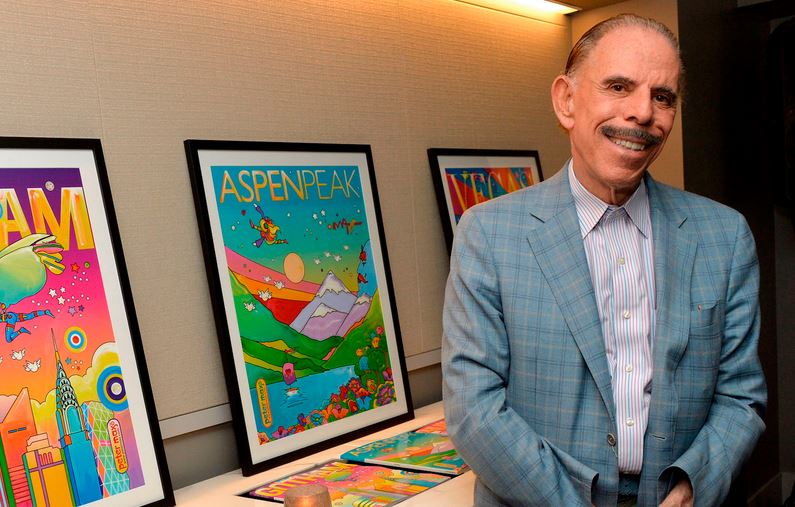
Peter Max built a career that was almost impossible to separate from the bright, energetic visual culture of the 1960s. His colorful stars, planets, flowers, floating figures and cosmic landscapes appeared far beyond traditional galleries. They could be found on posters, household products, clothing, stamps, airplanes and even cruise ships.
Peter Max had an estimated net worth of $50 million. His wealth was not created simply by selling paintings. Max understood the commercial possibilities of art early in his career and turned his distinctive style into a licensing and merchandising business that reached millions of people. At one stage, his designs were connected with more than 70 companies and product lines.
His financial story became increasingly complicated later in life because his assets included artwork, intellectual property, licensing rights and ownership interests in his art company. Still, the scale of his career shows how successfully he turned a recognizable artistic identity into a lasting business.
Peter Max Net Worth
Peter Max’s net worth was estimated at approximately $50 million.
Unlike an entertainer earning most of their money through a salary, Max accumulated wealth through several different channels. Original artwork, prints, commercial commissions, licensing agreements and merchandise all played a role.
One of his smartest business decisions was allowing other companies to manufacture and distribute products carrying his artwork. Max supplied the designs and his recognizable name while the companies handled much of the manufacturing and distribution.
That arrangement allowed his art to appear almost everywhere without requiring him to operate dozens of manufacturing businesses himself.
His later art company was also highly profitable. In 2018 alone, the Peter Max studio reportedly generated more than $30 million in profit. The business also controlled a huge collection of artwork and valuable intellectual property, making his overall financial position difficult to measure through cash alone.
Peter Max’s Early Life
Peter Max Finkelstein was born on October 19, 1937, in Berlin, Germany.
His father, Jakob, worked in the import-export business, while his mother, Salla, had trained in fashion design. His family left Germany during the rise of Nazism and eventually settled in Shanghai, where Max spent an important part of his childhood.
Living in Shanghai exposed him to a fascinating combination of Asian culture, European influences, American movies, jazz, comics and Buddhism.
Two interests became especially important to him during these early years: art and astronomy.
Those interests would later come together in his work. Planets, stars, skies and cosmic figures became recurring elements of the visual language that eventually made Peter Max instantly recognizable.
His family later lived in Haifa, Israel, where he continued studying art while also exploring astronomy. In 1953, the family moved to the United States after spending several months in Paris.
They eventually settled in Brooklyn.
Max attended Lafayette High School and later studied at the Art Students League in Manhattan. Interestingly, his early artistic training focused on realistic painting, which looked very different from the psychedelic style that later defined his public image.
How Peter Max Started His Career
Max’s first major professional opportunities came through commercial illustration and graphic design.
In 1962, he created an album cover for The Blues Piano Artistry of Meade Lux Lewis. The work earned recognition from the Society of Illustrators and helped establish him as a promising commercial artist.
He later partnered with artist Tom Daly to establish Daly & Max Studio.
The business worked on album covers, advertising campaigns and book jackets. It quickly became successful and earned numerous industry awards.
Yet commercial assignments alone were not enough for Max creatively.
He eventually left the partnership and spent more time developing his own artistic identity. During this period, many of the elements associated with classic Peter Max art began appearing.
Bright colors, mirrored faces, planets, flowers, clouds, celestial landscapes and floating figures became central to his work.
The Cosmic ’60s Made Him Famous
Timing played an enormous role in Peter Max’s rise.
American culture was changing rapidly during the 1960s. Psychedelic music, youth culture, environmental awareness and Eastern spirituality were becoming increasingly visible.
Max’s artwork seemed perfectly suited to that moment.
His posters were originally commercial products, but young consumers increasingly treated them as affordable artwork. Instead of simply looking at his designs in advertisements, people wanted them hanging on bedroom, dormitory and apartment walls.
Peter Max Posters helped distribute his designs through department stores, bookstores and other retailers. Millions of copies eventually circulated.
By 1969, his popularity had become so enormous that Life magazine featured him on its cover and devoted a major feature to his work.
Television appearances followed. Max demonstrated his artistic ability on programs including The Ed Sullivan Show and The Tonight Show, helping transform him from an illustrator into a recognizable cultural personality.
His Licensing Business Created Major Wealth
Peter Max was not interested in keeping his artwork limited to expensive galleries.
He embraced commercial licensing at a level that was unusual for a major artist at the time.
General Electric commissioned him to create colorful clocks, but that was only the beginning. His artwork eventually appeared on bedding, towels, dishes, shoes, clothing, stationery, glassware and many other everyday products.
At one point, his designs were connected with more than 70 product lines and licensing relationships.
The business model was fairly straightforward. Outside companies handled production and distribution while Max provided his designs and name. He then received a share of the commercial proceeds.
Traditional art critics sometimes viewed this level of commercialization negatively. Max saw things differently. He believed art could be experienced in ordinary life rather than being restricted to galleries and museums.
Famous Projects Beyond Posters
As his career developed, Peter Max became involved in increasingly ambitious projects.
The U.S. Postal Service commissioned him to create a stamp for Expo ’74 in Spokane, Washington. Environmental themes became particularly important in his work during this period.
The Statue of Liberty also became one of his signature subjects.
Max repeatedly painted the monument and became involved with efforts connected to its restoration during the 1980s. His interpretation of American patriotic imagery was distinctive because it maintained the energetic colors and cosmic style associated with his earlier work.
His commercial projects continued decades after the height of the psychedelic era.
In 1994, Max became an official artist for the FIFA World Cup in the United States. He later created a huge stage design for Woodstock ’99.
Continental Airlines even unveiled a Boeing 777 covered in Max’s distinctive artwork in 2000.
Norwegian Cruise Line later commissioned him to create hull artwork for the Norwegian Breakaway, bringing his visual style to another enormous canvas.
Did Peter Max Design Yellow Submarine?
One long-running misconception connects Peter Max with the Beatles’ animated movie Yellow Submarine.
Max did not design the film.
The movie’s art director was German illustrator Heinz Edelmann. Similarities between Edelmann’s colorful psychedelic designs and Max’s work probably helped the misunderstanding survive for decades.
Max did, however, have genuine connections with the Beatles’ cultural world.
His artwork was often described as a visual counterpart to the era’s music, and he later worked on Beatles-related projects. He painted Ringo Starr’s Baldwin piano for a charity project and also created portrait work involving Paul McCartney.
Peter Max’s Art Business
In his later career, much of Peter Max’s commercial operation was organized through ALP Inc.
The company name represented Peter and his children, Adam and Libra. Court records showed that Adam and Libra each owned 40 percent of the company, while Peter held 20 percent.
ALP managed the production, licensing, marketing and commercialization of his artwork.
The scale of the business was substantial.
Court proceedings later revealed that the company’s assets included an enormous inventory of artwork alongside intellectual property and licensing rights. One disputed proposed agreement alone involved approximately 1,000 individual artworks reportedly valued at more than $70 million.
This helps explain why estimating Peter Max’s personal wealth was complicated. His financial position involved much more than money sitting in conventional accounts.
Peter Max’s Personal Life
Peter Max married Elizabeth Ann Nance in 1963. They welcomed two children together, Adam and Libra, before their marriage eventually ended in divorce.
In 1997, Max married Mary Balkin.
His later years became increasingly private as health problems affected his ability to oversee his business and personal affairs.
Max developed dementia during the 2010s and gradually stepped away from managing his company. His declining health eventually became connected with complicated guardianship proceedings and disagreements involving relatives, business associates and others responsible for his affairs.
Despite being closely associated with psychedelic culture, Max said recreational drugs were not the foundation of his creative philosophy. Instead, he pointed toward meditation, yoga, astronomy, Eastern spirituality and nature as major influences on his imagination.
Peter Max’s Lasting Legacy
Peter Max created something much bigger than a traditional painting career.
His images became part of everyday popular culture. They appeared on stamps, posters, clothing, buses, magazine covers, airplanes, consumer products, cruise ships and enormous public installations.
That accessibility sometimes made his position in the traditional art world complicated, but it also made his work recognizable to people who rarely visited galleries.
His estimated $50 million net worth reflected the unusual path he followed. Max was an artist, illustrator, licensing pioneer and businessman who understood that a memorable visual identity could become valuable intellectual property.
More importantly, his explosive colors and cosmic imagery became closely connected with an entire cultural period. Even decades after the 1960s, Peter Max’s suns, stars, rainbows and floating figures remained instantly familiar, proving that his greatest business asset was ultimately the visual world he created.


:max_bytes(150000):strip_icc()/sara-haines-kids988-09142026-20408b13452443ab8d81e65d96929c27.jpg "Julia Stiles Children: Inside Her Family Life With Husband Preston J. Cook and Their Three Kids")

:max_bytes(150000):strip_icc()/Giada-De-Laurentiis-Jade-Lead-496debb981084c96b08cdfe105a3385f.jpg "Giada De Laurentiis Daughter: Meet Her Only Child Jade Marie With Ex-Husband Todd Thompson")
